The Medical Faculty of the Non-State Educational Institution “Medical and Social Institute of Tajikistan” is one of the principal academic structural divisions of the Institute. Its activities are primarily aimed at training specialists with higher medical education, particularly future physicians in the field of General Medicine. The main objectives of the Faculty are to provide students with comprehensive theoretical knowledge, develop practical medical skills, enhance clinical thinking, and build professional competencies in accordance with the modern requirements of the healthcare system. The educational process at the Faculty is organized in accordance with curricula, educational programmes, state standards of higher professional education, and sector-specific requirements for the training of medical personnel. In this regard, particular attention is paid to the integration of fundamental medical knowledge, the study of clinical disciplines, the development of diagnostic, therapeutic, and preventive skills, as well as adherence to the principles of medical ethics and professional deontology. Throughout the Faculty's period of operation, the total number of students has demonstrated a steady upward trend. In the 2020–2021 academic year, the total number of students was 166, whereas in the 2026–2027 academic year, this figure reached 1,983. This growth is primarily associated with the development of the General Medicine programme and reflects the expansion of educational activities, increasing interest among applicants in higher medical education, and the growing capacity of the Institute to train healthcare professionals. One of the important areas of the Faculty's activities is the development of international cooperation and the recruitment of international students. Currently, 406 international students from eight countries are studying at the Faculty. Specifically, 374 students are citizens of the Republic of India, 26 are citizens of the Federal Republic of Nigeria, and six students represent the Republic of Malawi, the Republic of the Philippines, the People's Republic of Bangladesh, the Republic of the Sudan, the United Republic of Tanzania, and the Kingdom of Saudi Arabia (one student from each country). The enrolment of students from different countries demonstrates the expanding international reach of the Institute's educational activities and the growing interest of international applicants in its medical education programmes. The presence of students from diverse national and cultural backgrounds contributes to the development of an international academic environment, the exchange of academic experience, the promotion of intercultural relations, and the strengthening of international cooperation in medical education. The General Medicine programme is delivered on a full-time basis, with a duration of six years. The content and structure of the educational programme are designed to ensure the gradual and systematic development of medical knowledge, ranging from fundamental disciplines to specialized clinical subjects. During the initial stage of their studies, students learn fundamental and biomedical disciplines. These include Human Anatomy, Histology, Normal and Pathological Physiology, Biological Chemistry, Biology, Chemistry, and Medical Physics. Studying these disciplines provides the scientific foundation necessary for understanding the structure and functioning of the human body, the characteristics of physiological and pathophysiological processes, and the mechanisms underlying the onset and development of diseases.
At subsequent stages of education, the main focus is placed on clinical and specialized medical disciplines. In particular, students study Internal Medicine, Surgical Diseases, Paediatrics, Obstetrics and Gynaecology, Neurology, Infectious Diseases, Ophthalmology, Oncology, Urology, Otorhinolaryngology, Phthisiopulmonology, Traumatology, and other medical fields. The study of clinical disciplines contributes to the development of students' professional skills in taking medical histories, assessing patients' health conditions, conducting clinical examinations, analysing laboratory and instrumental investigation results, establishing preliminary diagnoses, and selecting appropriate methods of treatment and disease prevention.
In the training of future medical professionals, particular importance is attached to practical classes, clinical case discussions, and the integration of theoretical knowledge with practical medical activities. This approach promotes the development of clinical reasoning, professional responsibility, and the ability to make well-founded decisions in future medical practice. Upon completion of the sixth year of study, students undergo final attestation in accordance with the established procedure. Graduates who have successfully completed the curriculum and educational programme and passed the state final attestation are awarded a higher professional education qualification document of the established format in the specialty of General Medicine. One of the priority areas of the Medical Faculty's activities is the integration of the educational process with research activities and the involvement of students in studying current issues in medical science. To develop scientific awareness, analytical abilities, and professional competence, the Faculty provides the necessary conditions for students to participate in research activities from the earliest years of their studies. Students have the opportunity to participate in the Student Scientific Society (SSS), where they can study and conduct research on current issues in medicine, including common diseases, modern methods of diagnosis, treatment and prevention, as well as ways to improve the quality of healthcare services. Participation in scientific clubs, preparation of presentations, writing research articles, and attending conferences and scientific-practical seminars contribute to the development of research skills, the ability to work with specialized literature, analyse scientific data, and develop students' critical thinking. Thus, research activities are regarded as an essential component of medical personnel training at the Faculty, providing a foundation for the development of specialists with a scientific outlook, analytical skills, and the ability to apply modern medical knowledge in their professional practice. From the establishment of the Medical Faculty until 10 January 2021, the Faculty was headed by Talabov Odina Davlatovich. During his leadership, the Faculty went through important stages of formation and development, making significant progress in the training of medical specialists.
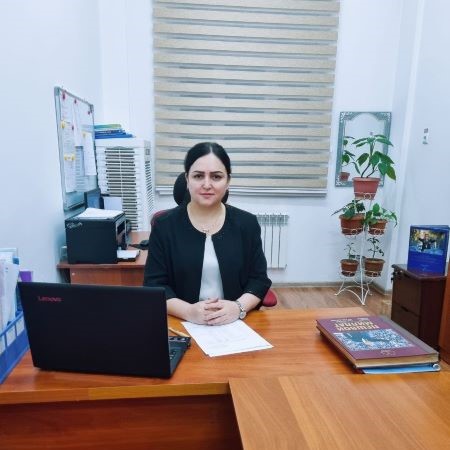
Since January 2021, the Faculty has been headed by Candidate of Philological Sciences, Associate Professor Rizoeva Gulnora Ikromovna. During her leadership, continuous efforts have been made to improve the educational and upbringing process, enhance the quality of education, strengthen academic discipline, and improve the organizational and methodological activities of the Faculty. Currently, three employees work within the management and administrative structure of the Medical Faculty. Each of them makes a significant contribution, within the scope of their official responsibilities, to ensuring the stable operation and educational and organizational development of the Faculty.
- Dean of the Medical Faculty — Rizoeva Gulnora Ikromovna
Candidate of Philological Sciences, Associate Professor Rizoeva Gulnora Ikromovna serves as the Dean of the Medical Faculty and is responsible for the overall management of its academic, research, educational, and organizational activities. The Dean's primary responsibilities include ensuring the proper organization of the educational process, monitoring the implementation of curricula and academic programmes, improving the quality of student learning, and ensuring compliance with regulatory documents in the field of education. In addition, the Dean coordinates the activities of academic staff, administrative personnel, and other structural divisions of the Faculty. She takes the necessary measures to create favourable learning conditions, strengthen academic discipline, increase students' sense of responsibility, and train qualified professionals. Within the framework of her managerial responsibilities, continuous attention is also given to academic performance, student participation in research activities, and the organization of scientific, cultural, and educational events.
- Administrative Officer of the Medical Faculty — Shukurzoda Umedi Voris
The Administrative Officer is one of the responsible employees within the Faculty's administrative and academic structure. This employee carries out their duties under the direct supervision of the Dean of the Faculty and in cooperation with the Deputy Dean for Academic Affairs. The administrative and records management activities of the Medical Faculty represent an important component of ensuring the smooth functioning of its academic, organizational, and administrative operations, as well as maintaining the Faculty's official documentation. Administrative work is carried out in cooperation with the Dean's Office, departments, academic staff, employees of the Institute's relevant structural divisions, and other administrative units. It is aimed at ensuring the effectiveness of the educational process and the timely fulfilment of tasks related to the Faculty's activities.
The main responsibilities of the Administrative Officer include:
- Organizing the proper and systematic maintenance of educational documentation;
- Coordinating organizational and administrative matters related to the Faculty's activities;
- Ensuring the timely and accurate circulation of academic documents;
- Maintaining cooperation with departments, academic staff, and other structural divisions of the Institute;
- Assisting in the organization of the educational process in accordance with the approved curricula;
- Monitoring the maintenance of student attendance records and academic performance documentation;
- Preparing the necessary information, reports, and documents for the Faculty's management.
- Academic Advisor of the Medical Faculty — Mamadumarov Shahboz Abduljalilovich
Mamadumarov Shahboz Abduljalilovich serves as an Academic Advisor at the Medical Faculty. His primary responsibilities are related to providing academic support, offering consultations, and coordinating students' educational activities. The Academic Advisor plays an important role in the educational process by providing guidance and support to students. He offers methodological assistance in selecting academic disciplines, developing individual study plans, and making effective use of the credit-based education system. One of the key areas of his work is monitoring students' academic progress, identifying learning difficulties, tracking academic debts, and taking the necessary measures to prevent academic delays. Furthermore, the Academic Advisor maintains regular cooperation with the Dean of the Faculty, the Administrative Officer, academic staff, and other relevant structural divisions of the educational institution. He coordinates matters related to student attendance, the completion of educational programmes, compliance with internal regulations, and the development of students' sense of responsibility. In addition, the Academic Advisor participates in addressing students' academic and social concerns, conducting explanatory discussions and meetings, and organizing educational and extracurricular activities. Thus, the joint activities of the Dean, Administrative Officer, and Academic Advisor provide an important foundation for the effective functioning of the Medical Faculty, strengthening its management system, improving the quality of education, and training highly qualified healthcare professionals. The Dean's Office of the Medical Faculty, as an important structural unit within the management system of the higher education institution, carries out its activities in accordance with the regulatory legal acts governing education and healthcare, the Institute's Charter, and its internal regulations. The main areas of the Dean's Office activities include planning, organizing, coordinating, and monitoring the educational process, research activities, educational and extracurricular work, and academic and methodological activities. In this regard, the Dean's Office coordinates the implementation of curricula, course syllabi, class schedules, examinations, and student assessments, taking the necessary measures to ensure the systematic and effective organization of educational activities. One of the most important responsibilities of the Dean's Office is monitoring the quality of education, students' acquisition of theoretical knowledge and practical skills, compliance with academic discipline, and the academic and methodological activities of the departments. Particular attention is also paid to improving the quality of clinical teaching, enhancing methods of practical skills training, introducing modern educational technologies, and developing students' research activities.
The Dean's Office also coordinates cooperation between departments, intra-institutional and international relations, and the participation of academic staff and students in scientific and educational events. These activities contribute to improving the educational environment and enhancing the quality of medical personnel training. The Medical Faculty consistently implements measures aimed at improving the quality of education, enhancing educational programmes, and adapting the training of specialists to the modern requirements of the healthcare system. In this regard, particular attention is paid to improving the content of clinical disciplines, developing the educational and practical medical facilities, enhancing the professional qualifications of academic staff, and developing students' practical skills. One of the Faculty's significant achievements in ensuring the quality of medical education and developing international cooperation was the successful completion of international accreditation of the General Medicine educational programme in 2024. The accreditation was conducted by the Independent Agency for Accreditation and Rating of the Republic of Kazakhstan. The completion of international accreditation represents an important stage in evaluating the quality of the educational programme, academic and methodological activities, and the Faculty's quality assurance system. Within the framework of this assessment, particular attention is given to the compliance of the educational programme with the established accreditation criteria, the content of the curriculum, the organization of specialist training, and the conditions under which educational activities are conducted. This achievement provides a foundation for further development of the educational quality assurance system, improvement of the General Medicine educational programme, strengthening international confidence, and expanding academic cooperation in the field of higher medical education. Thus, international accreditation is one of the important indicators of the Faculty's commitment to continuously improving the quality of medical education and ensuring that the training of future physicians meets the modern requirements of the healthcare system.
The structure of the Medical Faculty of the Non-State Educational Institution “Medical and Social Institute of Tajikistan” comprises 15 departments, each of which makes a specific contribution to the implementation of educational programmes, the study of fundamental and clinical disciplines, the development of students' professional competencies, and the advancement of research activities. The departments of the Faculty carry out their academic and scientific-methodological activities in accordance with work plans, educational programmes, and the requirements for training medical specialists. They are responsible for developing students' theoretical knowledge and practical skills.
List of Departments of the Medical Faculty:
- Department of Normal and Pathological Physiology.
- Department of Paediatrics.
- Department of Obstetrics and Gynaecology.
- Department of Human Anatomy and Latin Medical Terminology.
- Department of Surgical Diseases.
- Department of Family Medicine.
- Department of Internal Medicine with a Course in Clinical Cardiology.
- Department of Histology.
- Department of Ear, Nose and Throat Diseases.
- Department of Oncology and Radiation Diagnostics.
- Department of Paediatric Surgery, Topographic Anatomy and Operative Surgery.
- Department of Pathological Anatomy and Forensic Medicine
- Department of Urology with a Course in Anaesthesiology.
- Department of Neurosurgery with a Course in Combined Trauma.
- Department of Traumatology and Orthopaedics with Military Field Surgery.
The above-mentioned departments, each within its respective area of specialization, play an important role in teaching medical disciplines, conducting theoretical and practical classes, organizing research activities, and improving students' clinical skills. Regular cooperation between the departments and the Faculty contributes to ensuring the consistency and continuity of the educational process, coordinating academic and methodological activities, and improving the quality of training future healthcare professionals.
The Medical Faculty directs its future development towards improving the quality of medical education, strengthening its academic and clinical facilities, expanding research activities, and developing international cooperation. The primary objective of the Faculty is to train medical professionals who possess up-to-date medical knowledge, essential diagnostic and therapeutic skills, a high level of professional responsibility, adhere to the principles of medical ethics, and are capable of applying modern scientific achievements in practical healthcare and preventive medicine. Taking into account the growing number of students, the enrolment of international students, the development of the departmental structure, and the international accreditation of the General Medicine programme, the Medical Faculty continues its activities aimed at improving the system of highly qualified medical personnel training and contributing to the development of the healthcare system of the Republic of Tajikistan.